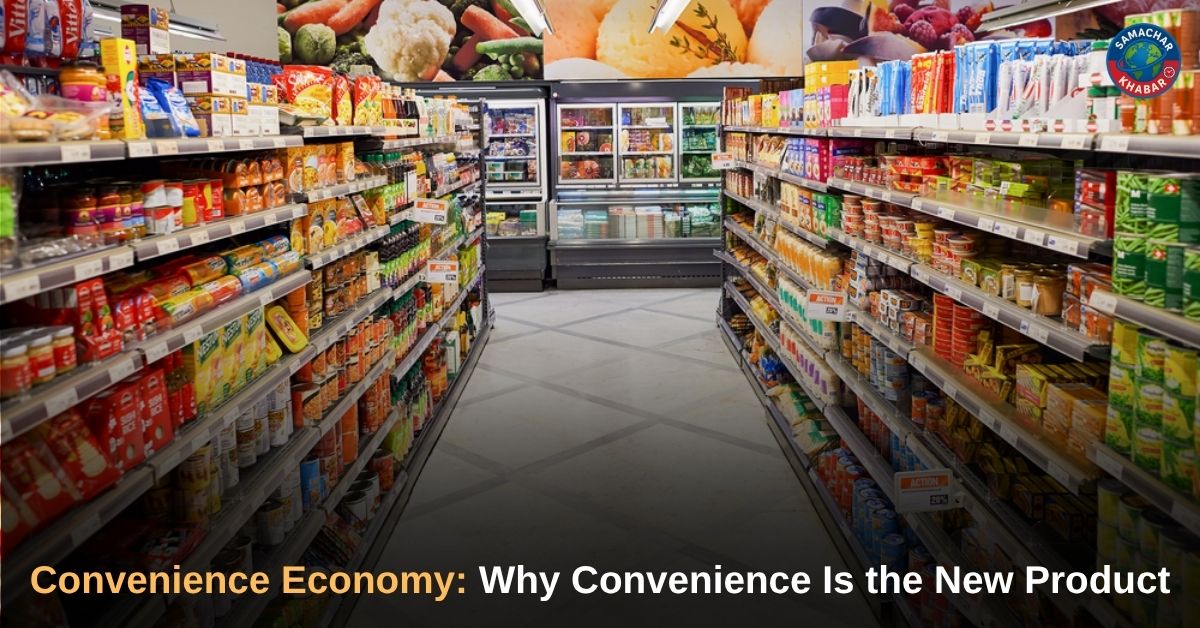
Life is moving fast. People are busy with work and other responsibilities. One thing that has become extremely important in modern life is convenience.
Earlier, people mostly focused on the price or quality of a product before buying it. Today, however, convenience has become one of the most important factors influencing consumer decisions. Whether it is ordering food, shopping online, or booking a ride, people prefer services that save time and effort. This shift in consumer priorities has led to the rise of what economists call the “convenience economy.”
Why Convenience Economy Matters for Economic Growth
he convenience economy is not just a temporary trend. It has become a significant driver of modern economic growth.
Businesses that focus on making life easier for consumers are growing rapidly. Companies that offer fast delivery, simplified services, and seamless digital experiences attract more customers than traditional models.
When services are quick and easy to access, more people tend to use them. This increases consumption and contributes to overall economic activity.
It also creates new types of employment opportunities, such as:
- delivery services
- gig economy jobs
- platform-based work
- digital service management
Therefore, the convenience economy is not only changing consumer behavior but also reshaping the structure of modern labor markets.
Overview of the Convenience Economy
The convenience economy is based on the idea of making everyday tasks easier, faster, and more accessible for people.
It includes services such as:
- Food delivery apps
- Online shopping platforms
- Ride-hailing services
- Instant payment systems
- On-demand entertainment platforms
These services reduce the time and effort required for daily activities. As a result, consumers increasingly expect products and services to be available instantly and with minimal effort.
.
Key Features of the Convenience Economy
Some important characteristics of the convenience economy include:
- Speed: Quick delivery and instant services
- Accessibility: Services available anytime and anywhere
- User-Friendly Technology: Simple and intuitive platforms
- Time-Saving: Reduced effort for consumers
- Personalization: Services tailored to individual preferences through data and algorithms
These features indicate that convenience is no longer an additional benefit; it has become the central value offered by many modern businesses.
How Convenience Benefits Consumers and Businesses
For consumers, convenience makes life easier. Tasks that previously required hours can now be completed in minutes. This improves efficiency and allows people to manage their time better.
For businesses, convenience provides a competitive advantage. Companies that offer simple and efficient services attract more customers. It also helps build customer loyalty because once people become accustomed to convenience, they rarely want to return to slower alternatives.
However, this growing convenience also raises expectations. Consumers increasingly expect instant responses, fast deliveries, and seamless experiences in almost every service they use.
Challenges in the Convenience Economy
Despite its benefits, the convenience economy also presents several challenges:
- High dependence on digital platforms
- Impulsive spending due to easy purchasing systems
- Pressure on delivery workers and gig economy employees
- Environmental concerns due to packaging waste and increased logistics
These challenges show that while convenience simplifies life, it can also create social, economic, and environmental concerns that need careful management.
India Overtakes Japan to Become World’s Fourth-Largest Economy
India-Specific Examples of the Convenience Economy
In India, the growth of the convenience economy can clearly be seen through the rapid expansion of digital platforms and on-demand services. Food delivery apps like Swiggy and Zomato allow consumers to order meals from nearby restaurants within minutes. Similarly, e-commerce platforms such as Amazon and Flipkart provide fast delivery, easy returns, and doorstep shopping, making traditional shopping less necessary.
Transportation services like Uber and Ola have also transformed urban mobility by offering quick and convenient ride bookings through mobile apps. In addition, India’s digital payment system, especially Google Pay, PhonePe, and the widely used Unified Payments Interface (UPI), has made instant transactions possible with just a few taps on a smartphone.
These examples demonstrate how India has rapidly embraced convenience-driven digital services, making daily activities faster, easier, and more efficient for millions of users.
Common Issues in the Convenience Economy
Some common problems within the convenience economy include:
- Reduced patience among consumers due to instant services
- Higher costs associated with convenience-based services
- Lack of awareness about hidden fees or service charges
- Overdependence on digital platforms
These issues highlight the need for responsible consumption and informed decision-making in a convenience-driven world.
convenience should enhance quality of life
The convenience economy reflects a major transformation in consumer behavior and market dynamics. Convenience is no longer just an additional feature — it has become a central product in itself.
While it offers speed and ease, it also requires awareness and responsible usage. Consumers must learn to balance convenience with thoughtful decision-making.
In the end, convenience should enhance quality of life rather than increase dependency or unnecessary consumption.
A Broader Perspective: Linking Convenience with Life Values
When we examine the convenience economy more deeply, it becomes clear that it is not only about technology or services; it also reflects deeper aspects of human behavior and lifestyle choices. Some philosophical and spiritual teachings emphasize simplicity, self-discipline, and mindful living. These ideas remain relevant even in today’s convenience-driven society. While convenience can improve efficiency, excessive dependence on convenience may weaken patience, self-control, and personal discipline.
A balanced approach — using convenience where necessary but maintaining self-awareness — can lead to a healthier and more meaningful lifestyle.
True well-being does not come only from ease and comfort, but from balance, awareness, and responsible living.