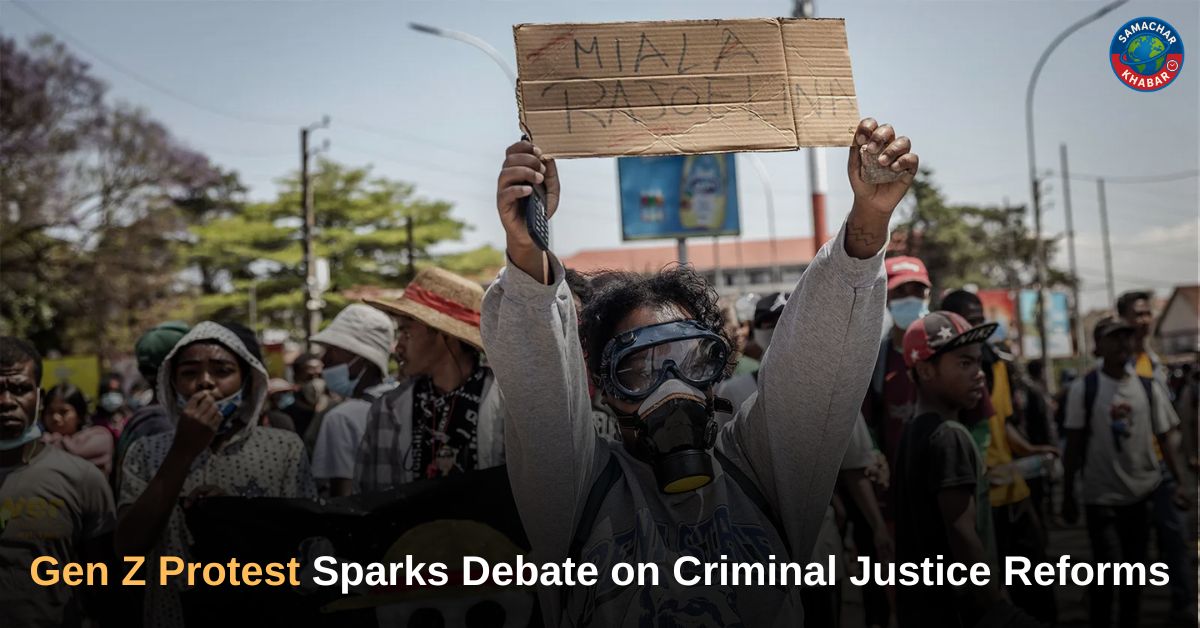
Gen Z has increasingly started addressing these complex and sensitive issues, which has intensified the situation. These protests reflect the collective frustration of millions of students across the country, who have finally found a platform to express their concerns.
The reason why many young people have taken these protests seriously is that they directly represent their lived experiences. The movement has captured widespread dissatisfaction related to repeated examination paper leaks, rising unemployment, increasing inflation, and the absence of responsive systems to address their grievances. For many, these challenges have led to feelings of uncertainty and disillusionment, making the protest a powerful expression of their struggles and aspirations.
In recent weeks, a wave of protests led largely by members of Gen Z has emerged across several regions, drawing attention to concerns regarding the Criminal Justice Process (CJP). The protests, marked by social media-driven mobilisation and street demonstrations, have quickly evolved into a broader debate on governance, accountability, and the role of young citizens in shaping public discourse.
Why does Gen Z have Protest?
The 5 demands in the manifesto were related to serious issues affecting the country and the common people.
- Major demands include not giving Rajya Sabha seats to retired judges.
- If any legitimates and true vote is deleted in the country, the chief election commissioner will be arrested under the UAPA.
- Women will be given 50% reservation in Parliament and the Cabinet.
- Licenses of the media houses of Ambani and Adani will be cancelled.
- If any MP goes from one party to another then a 20 years ban on their elections.
The underlying issues behind these demands are deeper and often overlooked. Concerns regarding the independence of the judiciary, the integrity of the Election Commission, and the perceived decline in media credibility form the core of the debate. The substance of these concerns is serious, and it is this depth that has generated unease within governing institutions. When genuine demands begin to resonate with a large section of the population, they naturally evolve into significant political challenges.
Also Read- The Brutal Truth About Confusion That’s Keeping Gen Z Broke & Unemployed in 2026
Strong Sense of Justice and Awareness
Generation Z has been raised in an environment of constant digital connectivity and access to information. Their exposure to information has made them highly aware of issues including inequality, corruption, climate change, and human rights.
Digital Power and Social Media
Social media plays a key role in Gen Z protests by rapidly spreading information and mobilising large groups, strengthening their belief in the impact of their collective voice.
Frustration with Systems
Many Gen Z protesters perceive existing systems as slow, lacking transparency, and inequitable, prompting them to demand reforms, greater accountability, and improved efficiency
Desire for Representation
Gen Z often feels underrepresented in decision-making, as leadership is largely dominated by older generations and key youth concerns remain insufficiently addressed. As a result, protests have become a means to demand inclusion in shaping their future.
Influence of Global Movements
Gen Z is globally interconnected and influenced by international movements. Exposure to protests worldwide has normalized activism as a legitimate and essential form of democratic expression.
Identity and Social Issues
Gen Z is highly vocal about equality, inclusion, and identity rights, and is more likely to mobilize collectively when they perceive unfair treatment of any group.
Distrust of Narratives and Institutions
Some Gen Z individuals question traditional narratives from governments, media, and political groups, which can lead to protests when they perceive information to be hidden or misrepresented.
Reaction to Being Misrepresented
Protests are often labeled in political or religious terms, which can heighten Gen Z’s frustration and prompt them to reaffirm their independence and non-partisan stance.
Political Interpretations and Allegations
The government started running deep state theories that through the US Gen Z protests, to politically weaken the democratic countries. This image was spread among Gen Z protest maximum followers are Foreign Conspiracy. Today a 12th class student is raising the voice of irregularities in his exam paper, then he is also being declared a Foreign Conspiracy, Deep State.
Religious Narratives Enter the Discourse
Another dimension that has emerged in the ongoing debate is the attempt by some groups and online commentators to link the protests to religious identities, particularly the Muslim community. Certain social media posts have suggested that the protests are driven or disproportionately supported by specific religious groups.
The Role of Social Media Amplification
Social media has played a dual role in the situation, enabling young people to organize, share concerns, and amplify their voices, while also contributing to the spread of unverified and polarizing content. Viral posts and trending videos have shaped public perception, often presenting conflicting narratives and leading to confusion and debate.
- A Reflection of Broader Trends
- Gen Z-led protests are widely viewed as part of a global trend of rising youth engagement in civic issues. Characterised by decentralised structures and digital mobilisation, these movements can grow rapidly but often face challenges in maintaining a consistent narrative. While their inclusivity is a key strength, it also makes them vulnerable to external interpretation and misrepresentation
As the protests continue, attention remains on whether the movement can sustain momentum while staying aligned with its goals. Shaped by grassroots activism, political narratives, and social media dynamics, its impact is still evolving. While these protests have successfully highlighted key issues within the criminal justice process, it remains uncertain whether they will result in meaningful reforms or be overshadowed by broader divisions. What is evident, however, is that a new generation has found its voice and is determined to be heard.
Role of Spiritual Values in Uniting Young Voices.
According to the teachings of Sant Rampal Ji Maharaj, social conflicts and divisions often arise from a lack of true spiritual understanding. He emphasizes that without moral and spiritual awareness, individuals tend toward conflict rather than peaceful resolution. In the context of Gen Z protests, his teachings suggest that while advocating for justice is important, it should be guided by truth, wisdom, and non-violence, with lasting change rooted in inner transformation and awareness.
How these Teachings Can Help Gen Z
1. Promoting Peaceful Action
He encourages resolving issues through peace, patience, help and understanding, rather than anger or conflict.
- This can help protests remain constructive and focused.
2. Avoiding Division
His philosophy stresses that all humans are equal and unite them, regardless of religion or background.
- This can reduce attempts to label movements politically or religiously and maintain unity.
3. Encouraging Truth-Based Thinking
He teaches followers to seek true knowledge (Satgyan) before forming opinions.
- This helps young people avoid misinformation and social media manipulation.
4. Building Moral Responsibility
Gen Z can learn to combine activism with discipline, ethics, and responsibility, making their efforts more impactful and respected.
5. Long-Term Change Through Awareness
Instead of only reacting to problems, his teachings focus on changing the root causes of injustice through awareness and righteous living.
While Gen Z continues to raise its voice for justice and reform, teachings like those of Sant Rampal Ji Maharaj highlight the importance of inner awareness, unity, and peaceful action as the foundation for meaningful and lasting societal change.
In the current context, today’s youth are well educated and increasingly aware of right and wrong. We encourage individuals to engage with the spiritual discourses of Sant Rampal Ji Maharaj, who presents evidence from major holy scriptures to explain the path to liberation from the cycle of worldly existence.
This is a rare and valuable opportunity to attain salvation, emphasising the correct path of worship for complete spiritual fulfillment.
As Sant Garib Das Ji Maharaj reflects in his couplet,
|| Ye sansaar samajhda nahi, kenda shaam do pehar nu;
Garib Das yeh waqt jaate hai, royoge is pehar nu||
Above lines state that “time once lost cannot be regained, leaving only regret for missed opportunities”. In a world filled with challenges and uncertainty, true peace lies in the refuge of the Supreme Almighty, a path that Sant Rampal Ji Maharaj seeks to guide individuals toward for ultimate spiritual liberation.
FAQs on Gen Z protest
1. Why is Gen Z protesting in 2026?
Gen Z is protesting over concerns related to governance, unemployment, inflation, and the criminal justice process.
2. What are the key demands of the Gen Z movement?
The movement seeks reforms in the judiciary, elections, media, and political representation.
3. How has social media influenced the protests?
Social media has helped spread awareness and mobilize young people quickly.
4. Why does Gen Z feel dissatisfied with existing systems?
Many young people believe current institutions lack transparency, accountability, and responsiveness.
5. Why have the protests become politically controversial?
Different groups have interpreted the movement differently, leading to political and social debates.