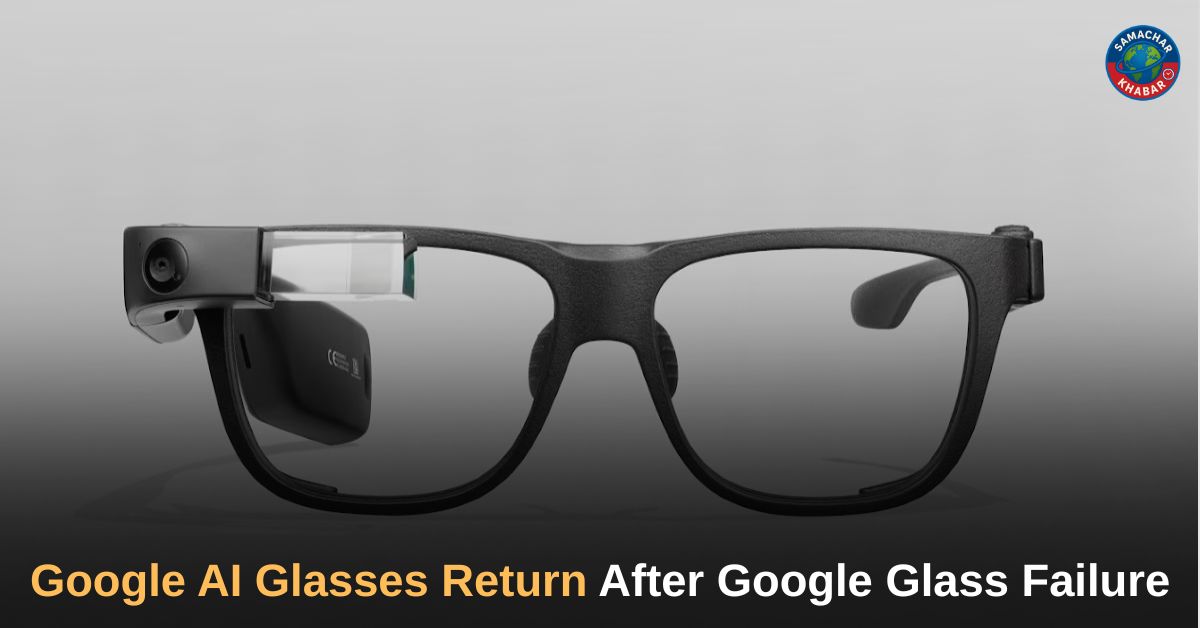
Google AI Glasses: More than a decade after the failure of Google Glass, Google is stepping back into the wearable AI market with a new generation of AI smart glasses powered by Gemini. Announced during Google I/O 2026, the new audio smart glasses signal the company’s renewed ambition to compete against rivals like Meta, Apple, and Snap in the fast-growing AI wearables industry.
The launch highlights how smart eyewear is becoming one of the most closely watched technologies in the AI era.
What Are Google’s New AI Smart Glasses?
Google’s latest AI-powered glasses are designed to provide hands-free assistance using the Gemini AI assistant. Unlike traditional augmented reality headsets, these glasses focus primarily on audio interactions.
Users can:
- Receive spoken directions privately
- Ask Gemini questions about surroundings
- Read message summaries
- Add calendar events
- Take photos using built-in cameras
- Connect with apps like DoorDash
According to Google executives at the conference, the glasses are designed to help users “stay hands free and heads up”, emphasizing convenience and natural interaction.
The smart glasses will support both Android and iOS devices, expanding their potential audience significantly.
Google Partners With Fashion Brands
To avoid the bulky appearance that hurt Google Glass years ago, Google partnered with eyewear brands:
- Warby Parker
- Gentle Monster
- Samsung
This collaboration reflects a major industry shift where wearable AI devices are being designed as fashion accessories instead of purely tech gadgets.
Also Read: Google’s Hidden Legacy: 3 Groundbreaking Technologies That Quietly Power the Modern Internet
Why Google’s Smart Glasses Matter
The wearable AI market is rapidly becoming a battleground among major tech companies. Smart glasses are increasingly viewed as the next major computing platform after smartphones.
Industry experts believe AI glasses could eventually integrate:
- Navigation
- Voice assistants
- Messaging
- Photography
- Real-time translation
- Shopping assistance
- Productivity tools
Google’s integration of Gemini into wearable devices may also strengthen its AI ecosystem by collecting more real-world user interaction data.
AI Smart Glasses Market Comparison
| Company | Product | Key Features |
| Gemini Smart Glasses | Audio AI assistant, Android XR | |
| Meta | Ray-Ban Smart Glasses | AI assistant, camera, audio |
| Apple | Rumored AI Glasses | Reportedly in development |
| Snap | Spectacles | AR-focused smart eyewear |
According to Meta, its Ray-Ban smart glasses sold approximately 7 million units in 2025, showing growing consumer interest in wearable AI technology.
Privacy Concerns Continue To Follow Smart Glasses
Despite excitement around AI eyewear, privacy concerns remain one of the industry’s biggest challenges.
Google Glass faced intense criticism in 2013 over fears of hidden recording and surveillance. Similar concerns are now surrounding Meta’s AI glasses, where users can unknowingly be filmed in public spaces.
Google has not yet fully explained privacy protections or data handling policies for its upcoming glasses.
Key Privacy Questions Consumers Are Asking
- How will user data be stored?
- Will recordings require visible indicators?
- Can AI analyze surroundings continuously?
- How secure are voice interactions?
As wearable AI devices become more common, companies may face increasing regulatory scrutiny worldwide.
The Future Of Wearable AI
Research firm IDC reported that global wearable device shipments crossed hundreds of millions annually, reflecting strong long-term market growth. Industry analysts believe AI-enabled wearables could become a mainstream technology category over the next decade.
Google is also reportedly working on future smart glasses featuring in-lens displays capable of showing text, notifications, and live information directly inside the lenses.
Developers are already building applications for Google’s Android XR platform, which could expand the functionality of these devices far beyond voice assistance.
Seeking Digital Vision while Spiritually Blind
The return of Google AI Glasses highlights our endless pursuit to enhance how we see and interact with the physical world. We constantly upgrade technology to overlay digital data onto our reality, hoping to achieve perfect clarity. But have we ever paused to ask: what use is advanced artificial vision if our inner consciousness remains entirely in the dark? Why are we so eager to decipher machine algorithms yet completely blind to the true purpose of our existence?
This reliance on man-made lenses reveals a deeper spiritual void. Jagatguru Tatvdarshi Sant Rampal Ji Maharaj explains that humanity is trapped in the material illusions of this mortal world. No smart glass can reveal the eternal realm of Satlok or the supreme truth of our soul’s journey. True vision isn’t technological; it is spiritual. Only the sacred knowledge granted by a Complete Saint can open our inner eyes and guide us to permanent salvation. Today, Sant Rampal Ji Maharaj is the only Complete Saint of this era.
Awaken your spiritual sight today. Explore the ultimate truth at:
- Website: www.jagatgururampalji.org
- YouTube: Sant Rampal Ji Maharaj
- Facebook: Spiritual Leader Saint Rampal Ji
- ‘X’ handle: @SaintRampalJiM
Frequently Asked Questions on Google AI Glasses
What are Google AI smart glasses?
Google AI smart glasses are wearable devices powered by Gemini AI that provide hands-free assistance through audio interactions, cameras, and smart app integrations.
When will Google smart glasses launch?
Google said the new smart glasses are expected to launch in fall 2026.
Will Google smart glasses have displays?
The first version focuses mainly on audio features, but Google confirmed that display-enabled smart glasses are under development.
How are Google smart glasses different from Google Glass?
The new glasses are lighter, AI-powered, fashion-focused, and designed around natural voice interactions instead of experimental augmented reality functions.
Who are Google’s biggest competitors in smart glasses?
Major competitors include Meta, Apple, and Snap.