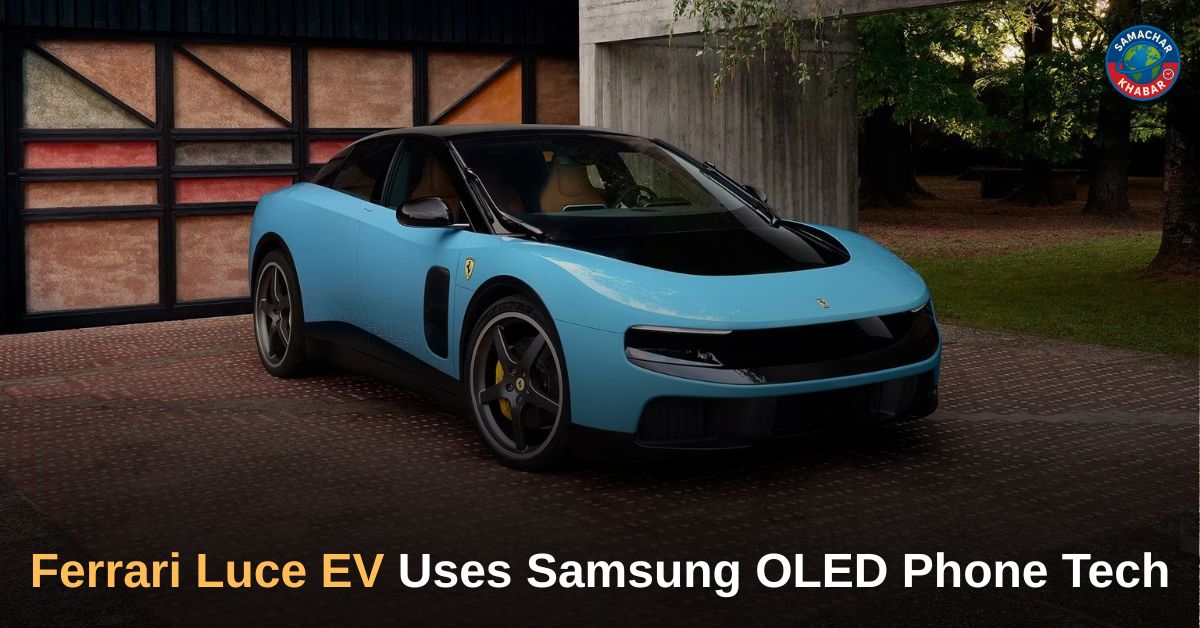
Ferrari Luce EV: Ferrari has unveiled new details about the cockpit technology inside the Luce, the company’s first fully electric supercar. The vehicle features advanced OLED display systems supplied exclusively by Samsung Display, including a layered instrument cluster that combines digital OLED panels with physical mechanical hands.
The technology behind the system originates from Samsung’s HIAA display innovation previously used in Galaxy smartphones. The Ferrari Luce also carries design input from former Apple design chief Jony Ive, creating a cockpit concept that blends automotive engineering with consumer electronics-inspired design.
Key Takeaways on Ferrari Luce OLED Dashboard Technology
- Ferrari Luce is Ferrari’s first fully electric vehicle
- Samsung Display supplies four OLED panels for the cockpit
- The dashboard combines OLED displays with mechanical gauge hands
- Samsung’s HIAA technology enables openings within OLED screens
- The technology was previously used in Galaxy S10 and Note 10 smartphones
- Former Apple design chief Jony Ive contributed to the Luce design
- The cockpit includes a 10.1-inch OLED central control display
- Mechanical hands rotate through perforations inside the OLED panels
Ferrari Introduces Futuristic OLED Cockpit in Luce EV
Ferrari has introduced a new dashboard concept in the Luce, the company’s first fully electric supercar. Instead of following the trend of replacing physical controls entirely with flat touchscreens, Ferrari has developed a layered cockpit system that combines digital displays with moving mechanical components.
The OLED systems used in the Luce are supplied exclusively by Samsung Display. According to Samsung Display, the vehicle includes four OLED panels integrated across the cockpit.
The most distinctive feature is the instrument cluster, which uses two OLED displays stacked together with real mechanical hands positioned between them. The arrangement creates a dashboard that visually resembles a large interactive smartwatch interface rather than a traditional automotive display.
Also Read: Tesla Cybertruck Sinks in Texas Lake During ‘Wade Mode’ Test, Driver Arrested
Ferrari’s approach represents a different direction in modern automotive interior design, where many manufacturers are increasingly shifting toward large uninterrupted touchscreens.
Samsung’s HIAA Technology Powers the Ferrari Luce Dashboard
The Ferrari Luce dashboard uses Samsung’s HIAA (Hole in Active Area) display technology. This technology allows openings to be created directly within OLED panels while the surrounding display remains functional.
Samsung Display said the opening used in the Ferrari dashboard measures around 100mm across. The company noted that this is approximately 20 times larger than the 5mm punch-hole camera openings commonly used in smartphones.
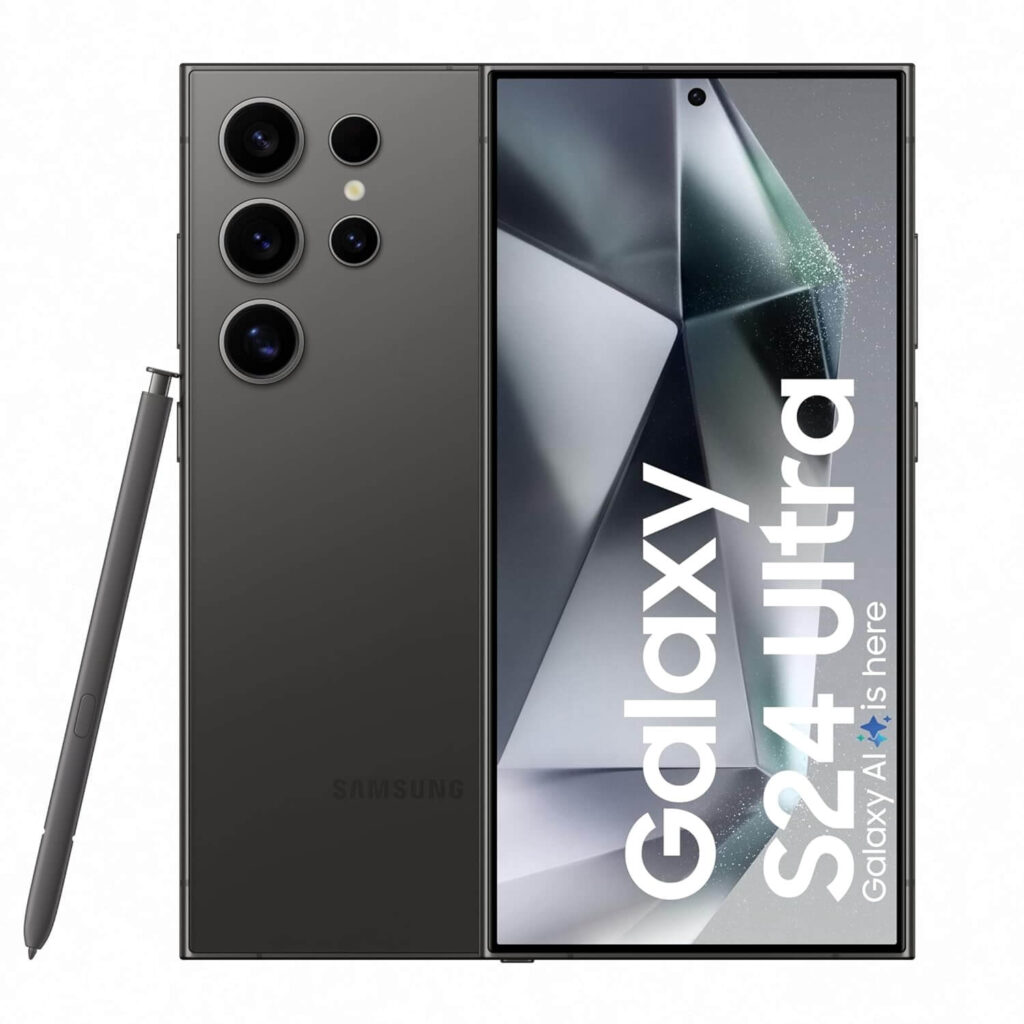
HIAA technology was first introduced in devices such as the Samsung Galaxy S10 and Samsung Galaxy Note10. In those devices, the technology was used to integrate front-facing cameras into smartphone displays.
Ferrari and Samsung Display have now adapted the same concept for automotive use, allowing physical mechanical elements to move through openings within OLED screens.
Key OLED Dashboard Features
| Feature | Details |
| OLED Supplier | Samsung Display |
| Total OLED Panels | Four |
| Dashboard Technology | HIAA (Hole in Active Area) |
| Central Display Size | 10.1-inch OLED |
| Mechanical Integration | Real rotating hands through OLED perforations |
| Technology Origin | Galaxy smartphone display systems |
Mechanical Hands Integrated Into OLED Display Panels
The Ferrari Luce cockpit includes a central 10.1-inch OLED display integrated into the control panel. Samsung Display stated that the screen can digitally present different modes including:
- Clock
- Stopwatch
- Compass
The display also incorporates three physical mechanical hands mounted through perforations inside the OLED panel itself. These hands rotate 360 degrees in real time while the display remains operational around them.
This combination of digital graphics and mechanical movement forms one of the most unusual aspects of the Luce interior design. Rather than eliminating physical dashboard components completely, Ferrari has integrated them directly into the OLED system.
The layered arrangement creates a hybrid interface that merges traditional mechanical styling with modern digital display technology.
Jony Ive’s Design Influence on the Ferrari Luce Interior
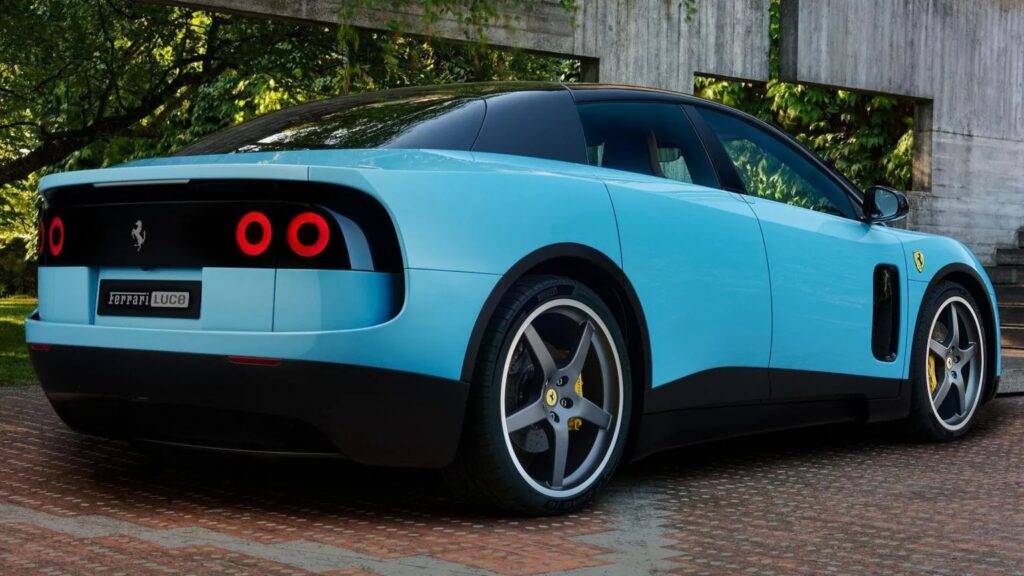
The Ferrari Luce project also includes involvement from Jony Ive, who helped shape the hardware design of the iPhone during his time at Apple.
The Luce was designed with input from Ive’s agency, bringing additional consumer technology influence into the vehicle’s interior concept. The combination of Samsung OLED technology and Ive’s design approach has resulted in a cockpit design that blends automotive luxury with visual elements commonly associated with premium smart devices.
The dashboard’s layered OLED arrangement and mechanical integration have drawn comparisons to interactive smartwatch interfaces and advanced wearable technology.
Ferrari Luce Reflects New Direction in Automotive Interface Design
The Ferrari Luce demonstrates how automotive manufacturers are increasingly incorporating technology originally developed for consumer electronics into vehicle interiors.
In this case, display technology designed for smartphone selfie-camera integration has been adapted into a large-scale automotive dashboard system.
The Luce also differs from many modern vehicle interiors by retaining physical moving elements instead of relying entirely on flat digital interfaces.
Samsung Display described the dashboard openings as significantly larger than those used in smartphones, highlighting the technical adaptation required for automotive implementation.
The cockpit design represents Ferrari’s effort to introduce a distinct interface concept as the company enters the fully electric vehicle segment.
Ferrari Luce Dashboard Signals Broader Technology Integration
The Ferrari Luce showcases how display innovations developed for smartphones are now influencing automotive design. By integrating Samsung Display’s HIAA OLED technology with physical mechanical components, Ferrari has introduced a cockpit concept that differs from conventional touchscreen-focused interiors. The involvement of Jony Ive further connects the project to consumer technology design principles. As Ferrari moves into the electric vehicle segment, Luce highlights how automotive manufacturers are increasingly blending digital display engineering with traditional mechanical design elements inside modern vehicle cabins.
Technology And Human Consciousness
The Ferrari Luce reflects how rapidly technology continues to evolve, bringing together automotive engineering, smartphone-inspired OLED systems, and mechanical craftsmanship within a single interface. As innovation reshapes daily life, many people also continue searching for balance between technological advancement and inner understanding.
Tatvdarshi Sant Rampal Ji Maharaj explains that while material inventions can improve comfort and convenience, lasting peace comes through true Spiritual Knowledge, self-realisation, and understanding the deeper purpose of human life. Such perspectives continue to remain part of broader discussions around modern progress and human consciousness.
For more information visit our
Website: www.jagatgururampalji.org
YouTube: Sant Rampal Ji Maharaj
Facebook: Spiritual Leader Saint Rampal Ji
X (Twitter): @SaintRampalJiM
FAQs on Ferrari Luce OLED Dashboard Technology
1. What is special about the Ferrari Luce dashboard?
The dashboard combines layered OLED displays with real mechanical hands moving through perforations inside the screen.
2. Which company supplies the OLED displays for Ferrari Luce?
Samsung Display exclusively supplies the four OLED panels used in the Ferrari Luce cockpit.
3. What is Samsung’s HIAA technology?
HIAA stands for Hole in Active Area, allowing openings within OLED displays while the surrounding screen remains functional.
4. Which smartphones previously used HIAA technology?
Samsung first used HIAA technology in the Galaxy S10 and Galaxy Note10 smartphones.
5. Who contributed to the Ferrari Luce interior design?
Former Apple design chief Jony Ive contributed to the Ferrari Luce interior design through his design agency.