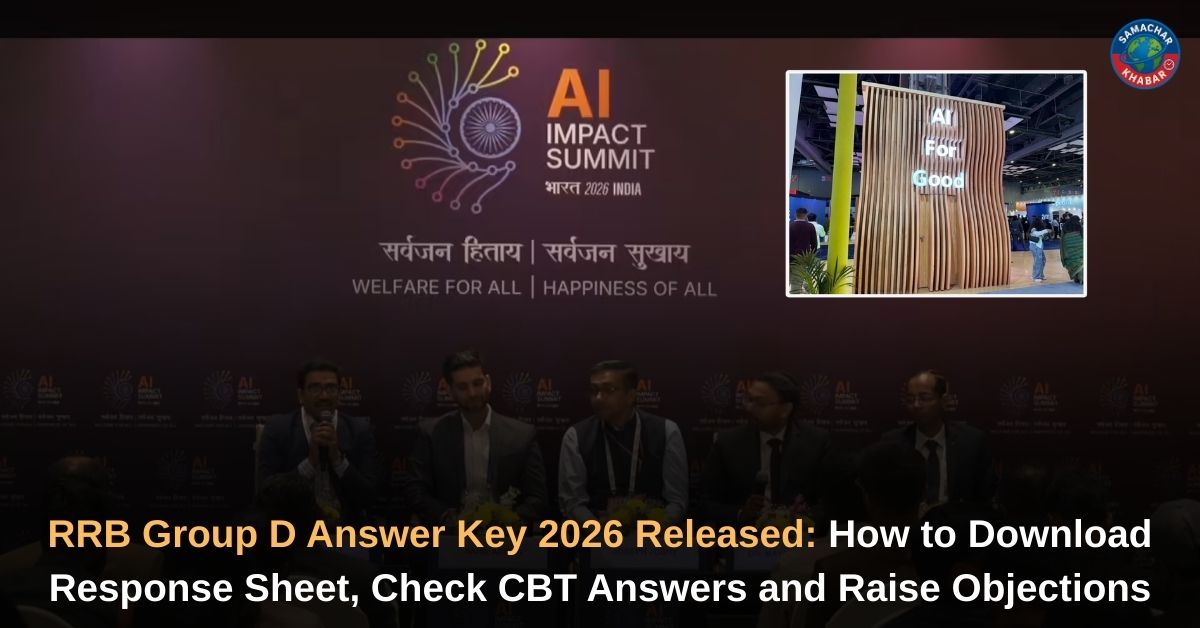
The India AI Impact Summit 2026, held at Bharat Mandapam in New Delhi from February 16 to 20, has emerged as one of the most significant global gatherings on artificial intelligence, bringing together heads of state, global technology leaders, policymakers, researchers, startups and academic institutions. Positioned as the first global AI summit hosted in the Global South, the event reflects India’s ambition to shape international conversations on responsible and inclusive AI while strengthening its position as a major technology and innovation hub.
The summit combined policy discussions, technology demonstrations, research dialogue and investment announcements, while also attracting criticism over logistical challenges, governance debates and questions around implementation and inclusivity.
Key Takeaways from the Summit: Global Collaboration, AI Governance, Investment and Inclusive Development
- India hosted the first global AI summit in the Global South with participation from over 100 countries, world leaders, ministerial delegations and international organisations.
- The summit focused on responsible, ethical and development-oriented AI aligned with the vision of Viksit Bharat@2047.
- India outlined large-scale investment expectations, infrastructure expansion and compute capacity growth under the IndiaAI Mission.
- Discussions covered AI governance, ethics, safety, data protection, deepfakes, job disruption and public interest applications.
- More than 700 sessions and over 600 startups showcased AI applications across sectors including healthcare, agriculture, education, finance and governance.
- Government initiatives emphasized accessibility of AI resources for startups, researchers and students.
- Operational challenges on the opening day led to criticism and subsequent corrective measures.
- Policy debates and opinion pieces highlighted concerns around corporate influence, civil society participation and regulatory outcomes.
India’s Vision for Responsible Artificial Intelligence and Global Consensus
Prime Minister Narendra Modi inaugurated the summit, describing artificial intelligence as a transformative force capable of strengthening governance, improving service delivery and accelerating economic growth. The summit framework was anchored on the guiding principles of People, Planet and Progress, referred to as the three sutras, intended to shape global cooperation on AI for collective benefit.
Government leaders emphasized that AI must be deployed responsibly, ensuring that innovation does not come at the cost of social equity or public safety. Union IT Minister Ashwini Vaishnaw stated that India aims to build global consensus on the proper and ethical use of AI so that the technology benefits humanity while containing harms arising from improper use.
The summit also reflected India’s broader ambition to transition from participating in the AI revolution to actively shaping it through infrastructure development, policy frameworks and talent creation.
Investment Outlook, Compute Infrastructure and the IndiaAI Mission
A major policy focus at the summit was the expansion of AI infrastructure and investment. Government officials indicated expectations of nearly $200 billion in investments across different layers of the AI stack over the coming years, highlighting strong venture capital interest in deep-tech startups.
The government announced plans to expand compute capacity through additional GPU procurement, building upon an existing common compute layer. Officials stated that additional GPUs would be deployed to strengthen research capability, startup innovation and large-scale AI development. The IndiaAI Mission was presented as the central framework guiding indigenous AI model development, datasets, skilling programmes and accessible compute infrastructure.
Institutional involvement from the Ministry of Electronics and Information Technology (MeitY), Software Technology Parks of India (STPI) and the Digital India initiative was highlighted as critical to integrating AI into governance and economic systems.
Global Participation and India’s Position as an AI Growth Market
The summit drew participation from more than 20 heads of state and ministerial delegations from over 45 countries, along with senior officials from international organisations and the United Nations.
Leaders including France’s President Emmanuel Macron, Brazil’s President Luiz Inácio Lula da Silva, Spain’s President Pedro Sánchez Pérez-Castejón, Switzerland’s President Guy Parmelin, Netherlands Prime Minister Dick Schoof, Bhutan Prime Minister Tshering Tobgay, Sri Lanka President Anura Kumara Disanayaka and UAE Crown Prince Sheikh Khaled bin Mohamed bin Zayed Al Nahyan were among those scheduled to attend.
Global technology leaders including OpenAI CEO Sam Altman and Alphabet CEO Sundar Pichai were expected at the summit, reflecting India’s growing importance as a key AI market with a large talent pool and rapidly expanding digital ecosystem. Bill Gates’ participation was later confirmed by the Gates Foundation following speculation regarding his attendance.
Industry discussions highlighted India’s attractiveness for AI infrastructure investments, data centres and Global Capability Centres, with companies viewing the country as a major hub for engineering talent and AI deployment.
AI Applications Across Governance, Welfare and Public Service Delivery
A major emphasis of the summit was on practical AI deployment across governance and social welfare sectors. The Ministry of Tribal Affairs showcased AI-enabled governance platforms aimed at improving service delivery among tribal communities. Initiatives included AI-powered translation systems supporting tribal languages, multilingual conversational chatbots providing scheme-related information and digital platforms streamlining forest rights claims through mapping and workflow monitoring.
Also Read: Discord Introduces Global Age Verification From March With Face Scan or ID Requirement
Officials stated that such initiatives aim to bridge linguistic and geographic barriers, improve transparency and strengthen last-mile delivery of welfare schemes while preserving cultural heritage through AI-enabled digital archives and immersive museum experiences.
Across sectors, AI applications demonstrated at the summit included telemedicine and remote diagnostics in healthcare, predictive analytics for disease detection, precision farming tools in agriculture, adaptive learning platforms in education, financial fraud detection systems and AI-assisted governance solutions such as language translation of court judgments and smart city management systems.
Research Symposium, Academic Dialogue and Flagship Innovation Challenges
The summit’s research symposium served as a key academic platform bringing together researchers, policymakers and industry experts to discuss AI-driven scientific discovery, safety frameworks and equitable access to compute resources. Academic discussions emphasized the importance of human oversight, responsible governance and addressing misinformation risks associated with generative AI.
Pre-summit events across universities and regional conferences contributed to national dialogue on AI ethics and societal impact. Flagship initiatives such as AI for ALL, AI by HER, and YUVAi were introduced to identify scalable AI solutions, promote women-led innovation and encourage youth participation in solving real-world problems through artificial intelligence.
The AI Impact Expo, spread across more than 70,000 square metres, hosted startups, research institutions and international partners, reflecting the transition of AI from research experiments to large-scale deployment.
Operational Challenges and Governance Debates
Despite large participation and global attention, the summit’s opening day faced logistical challenges including overcrowding, long queues, restricted access to exhibition areas and operational confusion reported by delegates and exhibitors. Union IT Minister Ashwini Vaishnaw apologised for the inconvenience and announced that a monitoring “war room” had been established to address operational issues and improve visitor experience.
Alongside operational concerns, critical opinion pieces questioned whether large-scale international summits translate into meaningful regulatory outcomes. Some observers argued that corporate participation dominated programming, while representation from civil society and labour groups remained limited. These debates reflected broader global concerns regarding AI governance, accountability and equitable development.
Controversies and Public Debate Around Innovation Claims
The summit also witnessed controversy involving a robotic dog displayed by Galgotias University after a viral video led to allegations that an imported device had been presented as indigenous innovation. The university later clarified that the robot was procured as a learning tool for students and was not developed by the institution, though the issue continued to generate online criticism and fact-checking discussions.
The episode underscored heightened public scrutiny around technological claims and innovation narratives at global technology forums.
Spiritual Perspective: Understanding the Role of True Knowledge in the Age of Artificial Intelligence
Amid rapid technological advancement and discussions on artificial intelligence shaping human society, spiritual thinkers often emphasize that material progress alone cannot ensure peace, balance or ethical decision-making. The teachings of Saint Rampal Ji Maharaj highlight that true knowledge helps humanity distinguish between beneficial and harmful actions, guiding individuals toward responsible conduct and social harmony.
According to this perspective, technology should serve humanity with compassion, justice and moral awareness. As AI continues to influence governance, economy and daily life, spiritual understanding is seen as a means to ensure that human intelligence remains guided by ethics, truth and the welfare of all living beings.
India’s Expanding Role in Shaping the Future of Artificial Intelligence
The India AI Impact Summit 2026 reflected both the promise and complexity of artificial intelligence as nations attempt to balance innovation with governance and societal responsibility. The summit demonstrated India’s intention to play a larger role in global AI discussions through investment, infrastructure expansion and international collaboration, while also highlighting the challenges of implementation, regulation and inclusive participation.
As governments and industries continue to advance AI adoption, the long-term significance of the summit will depend on how policy commitments, technological innovation and global cooperation translate into practical outcomes that benefit society while addressing ethical and governance concerns associated with rapid technological change.
FAQs on India AI Impact Summit 2026
Q1. What is the India AI Impact Summit 2026?
The India AI Impact Summit 2026 is a global artificial intelligence conference held in New Delhi, bringing together world leaders, tech companies and policymakers to discuss AI governance, innovation and inclusive development.
Q2. Where and when was the India AI Impact Summit 2026 held?
The India AI Impact Summit 2026 was held at Bharat Mandapam, New Delhi, from February 16 to February 20, bringing participants from more than 100 countries and global technology organizations.
Q3. What were the main objectives of the India AI Impact Summit 2026?
The summit aimed to promote responsible AI use, strengthen global collaboration, discuss governance frameworks, expand AI infrastructure and ensure artificial intelligence supports inclusive growth and public welfare.
Q4. Who attended the India AI Impact Summit 2026?
The summit was attended by global leaders, ministers, technology CEOs including Sam Altman and Sundar Pichai, researchers, startups and international organizations participating in AI policy and innovation discussions.
Q5. What issues and challenges were discussed during the India AI Impact Summit 2026?
Discussions covered AI ethics, governance, job disruption, data protection, deepfakes, public interest applications, infrastructure investment and operational challenges faced during the opening days of the summit.