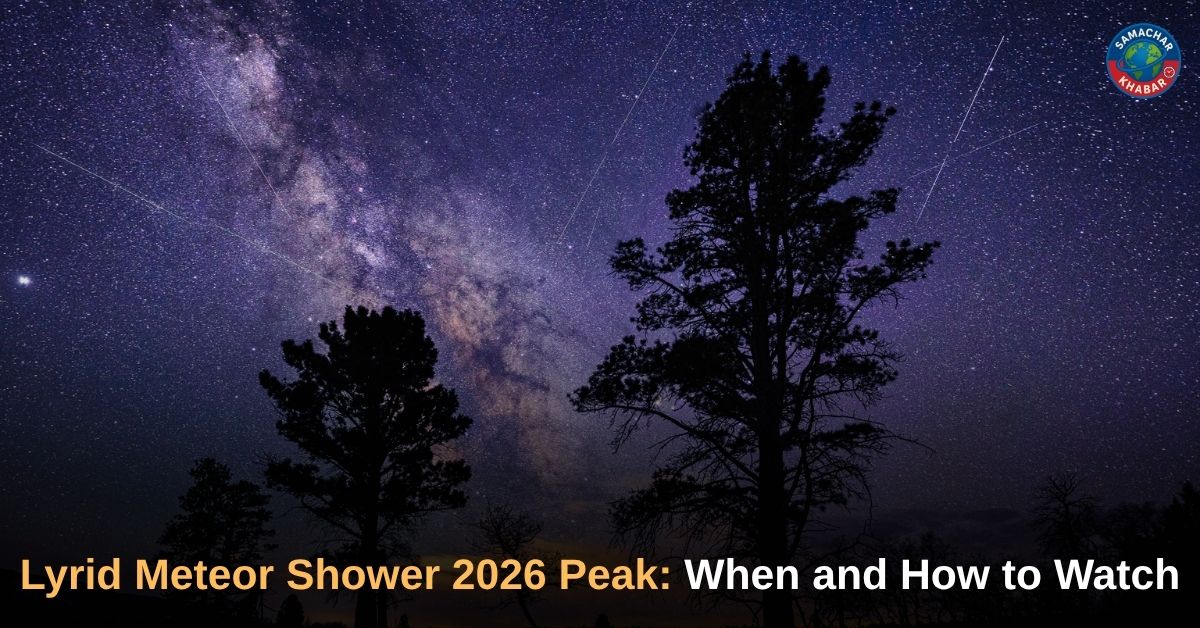
The annual Lyrid meteor shower is set to peak between late April 21 and the early morning hours of April 22, offering bright, fast-moving meteors and occasional fireballs. Active from April 14 to April 30, the event is expected to deliver favourable viewing conditions this year due to minimal moonlight interference.
Key Takeaways: Lyrid Meteor Shower 2026
- Peak expected between late April 21 and early April 22
- Active period: April 14 to April 30
- Best viewing time: Midnight to dawn, especially 2 a.m. onwards
- 10–20 meteors per hour under ideal conditions
- Known for bright streaks and occasional fireballs
- Radiates from Lyra near Vega
- Caused by debris from Comet Thatcher
- Moon expected to set early, improving visibility
Peak Timing and Activity Window
Stargazers are preparing for the annual Lyrid meteor shower, which has been documented for over 2,700 years. The shower is expected to peak between late April 21 and early April 22, with a broader visibility window extending for several days on either side.
According to the American Meteor Society, peak activity is expected around 20:00 UTC on April 22, making the nights of April 21–22 and April 22–23 prime viewing opportunities, particularly in the Northern Hemisphere.
Where to Look in the Night Sky
The meteors appear to radiate from the constellation Lyra, near the bright star Vega, which rises in the northeast shortly after sunset and climbs higher toward the early morning hours.
Also Read: A Celestial Coincidence: The Fireball Over France and the Delhi-NCR Meteor Shower
However, experts advise not to look directly at the radiant. Instead, viewers should scan the surrounding sky or look toward the zenith, as meteors can appear in any part of the sky. The longest and most dramatic streaks are often visible away from the radiant, making a broader field of view more effective.
Best Viewing Time and Conditions
Astronomers note that the best time to observe the Lyrids is during the dark hours between midnight and dawn, especially from around 2 a.m. onwards, when Earth rotates into the stream of incoming debris.
This shower favours early risers, as visibility improves in the pre-dawn hours. Fortunately, in 2026, a slim waxing crescent moon will set after midnight, leaving darker skies during peak viewing hours.
To maximise visibility:
- Choose a dark location away from city lights
- Face the darkest part of the sky
- Use open areas like fields, beaches, or hilltops
- Avoid telescopes or binoculars, as they limit field of view
Essential Viewing Tips for Stargazers
Experts recommend the following:
- Do not look directly at the radiant: Look slightly away from Lyra for longer meteor trails
- Allow your eyes to adjust: It typically takes about 30 minutes for full dark adaptation
- Avoid phone screens: Blue light disrupts night vision
- Stay comfortable: Lie back on a blanket or reclining chair
- Be patient: Longer observation increases chances of sightings
Meteor Rates and Unique Features
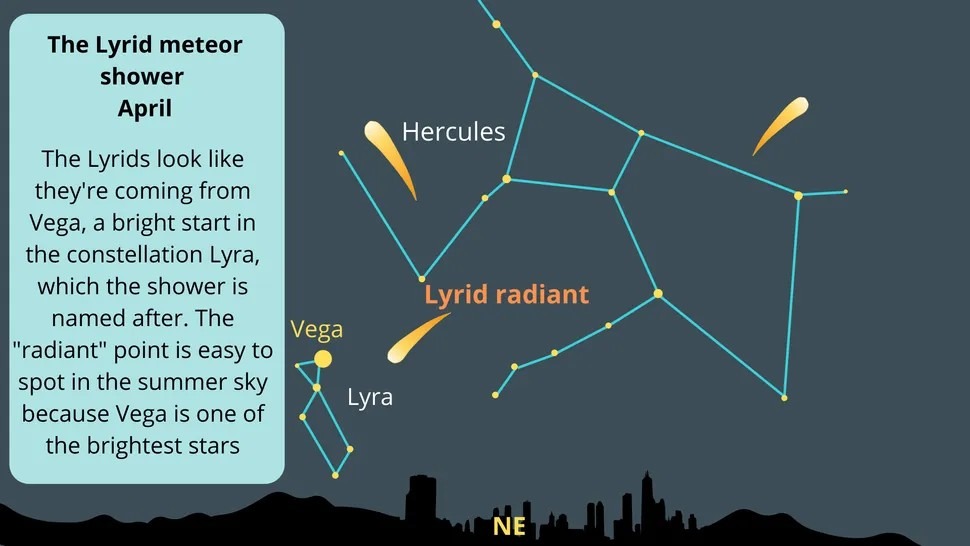
While the Lyrids are not the most prolific meteor shower, they are known for producing bright, fast-moving meteors and occasional fireballs that can leave glowing trails. News.Az reports, citing PBS.org, that these features make the Lyrids distinct despite moderate activity levels.
Under ideal conditions, observers may see about 10 to 15 meteors per hour, while some estimates suggest up to 15–20 meteors per hour. According to NASA’s NASA Center for Near-Earth Object Studies, some meteors may appear as bright fireballs or bolides, reaching a visual magnitude comparable to Venus.
Rare and unpredictable outbursts can occasionally increase activity to as many as 100 meteors per hour.
Scientific Background and Origin
The Lyrid meteor shower occurs when Earth passes through debris left behind by Comet Thatcher, which orbits the Sun once every 415 years and was last observed in 1861.
As dust and rock particles enter Earth’s atmosphere at speeds of nearly 110,000 miles per hour, they burn up and create luminous streaks visible from the ground. In another description, these particles travel at about 30 miles (49 kilometers) per second, heating and vaporising as they compress the air.
The Lyrids are among the oldest recorded meteor showers, with observations dating back to 687 BC in China.
Photography and Observation Opportunities
For those interested in capturing the meteor shower, guides to photographing meteor showers, along with recommendations for cameras and lenses for astrophotography, can help improve results.
No special equipment is required for viewing, but patience and dark skies significantly enhance the experience.
Comparison With Eta Aquariids Meteor Shower
Another meteor shower, the Eta Aquariids, will be active from April 19 to May 28, with a peak expected on May 5–6.
Although it can produce up to 60 meteors per hour, strong moonlight may reduce visibility. Additionally, the Eta Aquariids favour observers in the Southern Hemisphere, making the Lyrids more accessible in the Northern Hemisphere during April.
Favourable Conditions Strengthen 2026 Viewing Prospects
The 2026 Lyrid meteor shower is expected to offer excellent viewing conditions due to reduced moonlight and clear skies during peak hours. With proper preparation, dark surroundings, and patience, observers can witness one of the oldest known celestial events in optimal conditions.
Spiritual Reflection Through Cosmic Events
The Lyrid meteor shower highlights the vastness, order, and precision of the universe, reminding observers of deeper existential questions about creation and purpose. Such celestial events often encourage reflection beyond scientific observation.
According to the teachings of Tatvdarshi Sant Rampal Ji Maharaj, true understanding of the universe comes through His Divine Knowledge, which explains the origin and functioning of creation in a clear and evidence-based manner. Observing the night sky with awareness can inspire individuals to seek spiritual clarity alongside scientific curiosity, maintaining balance between knowledge and inner understanding.
For more information visit our
Website: www.jagatgururampalji.org
YouTube: Sant Rampal Ji Maharaj
Facebook: Spiritual Leader Saint Rampal Ji
X (Twitter): @SaintRampalJiM
FAQs on Lyrid Meteor Shower 2026
1. When will the Lyrid meteor shower peak in 2026?
It will peak between late April 21 and early April 22.
2. What is the best time to watch the Lyrids?
Between midnight and dawn, especially from 2 a.m. onwards.
3. How many meteors can be seen per hour?
Around 10–20 meteors per hour under ideal conditions.
4. Where should I look in the sky?
Near Lyra, but not directly at the radiant; meteors appear across the sky.
5. What causes the Lyrid meteor shower?
It is caused by debris from Comet Thatcher entering Earth’s atmosphere.