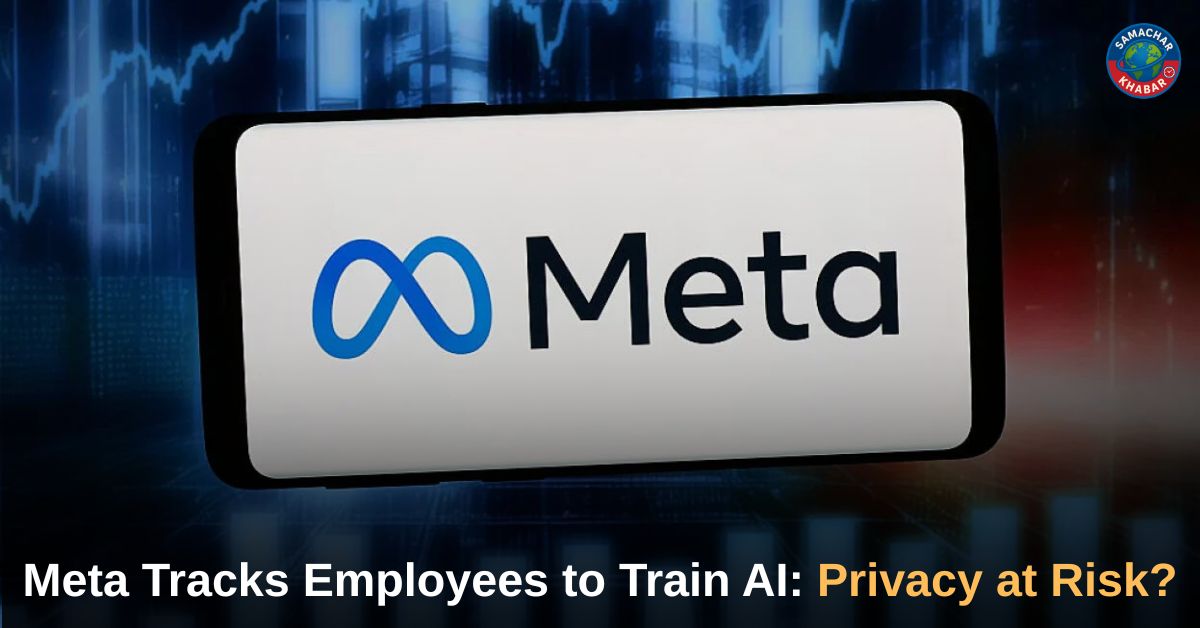
Meta Platforms is installing tracking software on computers of its U.S.-based employees to collect detailed activity data, including keystrokes, mouse movements, and screen snapshots. According to internal memos seen by Reuters, the initiative aims to improve the company’s Artificial Intelligence (AI) models and support the development of autonomous AI agents capable of performing workplace tasks. The move is part of Meta’s broader strategy to integrate AI deeply into its workflows.
Key Takeaways: Meta Employee Tracking for AI Training
- Meta is introducing the Model Capability Initiative (MCI) tool for data collection
- The tool captures keystrokes, clicks, mouse movements, and screen snapshots
- Data will be used exclusively for training AI models
- The initiative supports building autonomous AI agents for workplace tasks
- Meta states the data will not be used for employee performance evaluation
- The move aligns with Meta’s broader AI-driven workforce transformation
Meta Introduces MCI Tool for Data Collection
Meta Platforms has informed employees through internal memos that it is installing a new tracking tool, known as the Model Capability Initiative (MCI), on computers of its U.S.-based workforce. According to reports by Reuters, the tool will operate on selected work-related applications and websites.
The system is designed to capture detailed datasets, including:
- Mouse movements
- Click actions
- Keystrokes
- Occasional screen snapshots
These datasets will provide contextual information about how employees interact with computer systems during their daily work.
Also Read: Meta AI और Cloud Processing: आपकी निजी फोटोज पर बढ़ता खतरा और सुरक्षा उपाय
Objective: Improving AI Models Through Real Work Data
The internal memo explains that the primary goal of the initiative is to improve AI models in areas where they currently struggle to replicate human interaction with computers. These include tasks such as:
- Selecting options from dropdown menus
- Using keyboard shortcuts
- Navigating interfaces efficiently
The memo states that employees can contribute to enhancing AI performance simply by carrying out their routine tasks. This approach allows Meta’s systems to learn directly from real-world usage patterns.
Part of Broader Push for Autonomous AI Agents
The tracking initiative is part of Meta’s broader effort to develop AI agents capable of performing work tasks autonomously. The company has been actively integrating AI into its workflows and restructuring operations around this technology.
Mark Zuckerberg has been leading this shift, emphasizing that deeper AI integration will make the company operate more efficiently.
Also Read: Instagram to End End-to-End Encrypted Messaging from May 8, Meta Confirms
In a separate memo, Andrew Bosworth outlined the company’s long-term vision. He stated that Meta aims to create systems where AI agents perform most tasks, while human employees focus on directing, reviewing, and improving those systems.
AI for Work Initiative and ATA Transformation
The data collection effort is linked to Meta’s internal “AI for Work” initiative, which has been rebranded as the Agent Transformation Accelerator (ATA).
Bosworth noted that the company would intensify its internal data collection processes to support this transition. He emphasized the need for building datasets and evaluation systems covering various types of workplace interactions.
The goal, according to the memo, is to establish a “closed loop” system where AI agents learn from instances where human intervention is required, enabling them to improve over time.
Data Usage and Safeguards Explained
Meta has clarified that the data collected through the MCI tool will be used strictly for AI model training purposes.
Andy Stone stated that:
- The data will not be used for performance assessments
- Safeguards are in place to protect sensitive content
However, specific details about what types of data would be excluded from collection have not been disclosed.
Stone also explained that real examples of human-computer interaction are essential for building AI agents that can effectively assist with everyday tasks.
Workforce Changes and AI Integration Efforts
The initiative comes alongside broader organizational changes within Meta aimed at supporting AI development. These include:
- Encouraging employees to use AI agents for coding and other tasks
- Introducing a new general-purpose job role titled “AI builder”
- Creating an Applied AI (AAI) engineering team focused on improving AI coding capabilities
- Transferring selected software engineers into AI-focused roles
Meta is also planning workforce reductions, including laying off 10% of its global workforce starting May 20, with additional cuts expected later in the year.
Industry Trend: AI Automation and Workforce Shift
Meta’s move reflects a broader trend among major U.S. technology companies toward AI-driven automation. AI tools are increasingly being used to handle complex tasks such as:
- Application development
- Data organization
- Workflow management
Other companies, including Amazon and Block Inc., have also reduced their workforce in recent months as part of similar shifts.
Concerns Around Workplace Surveillance
The introduction of employee activity tracking has raised concerns regarding workplace monitoring and privacy.
Ifeoma Ajunwa noted that such technologies have historically been used to detect employee misconduct but now extend to real-time monitoring of white-collar workers.
She highlighted that U.S. federal law does not impose strict limits on worker surveillance, though some state laws require informing employees about monitoring practices.
Valerio De Stefano pointed out that similar practices would likely face legal challenges in Europe, where regulations such as the General Data Protection Regulation (GDPR) impose stricter rules.
He added that in countries like Italy and Germany, electronic monitoring of employees is either restricted or allowed only under exceptional circumstances.
Shifting Workplace Dynamics in the Age of AI
Meta’s initiative signals a significant shift in how workplace data is utilized to advance AI systems. By leveraging real-time human interactions, the company is attempting to build more capable and autonomous AI agents.
At the same time, the move highlights evolving questions around privacy, surveillance, and the balance of power between employers and employees in increasingly AI-driven work environments.
Divine Accountability Beyond Human Observation
While Meta platforms collect real-time human interactions to strengthen its AI systems, the development also reflects a deeper perspective on observation and accountability. In everyday life, individuals perform actions—both seen and unseen—believing that only visible outcomes matter. However, spiritual understanding highlights that every action, thought, and intention is continuously recorded beyond human systems.
According to true spiritual knowledge shared by Jagatguru Tatvdarshi Sant Rampal Ji Maharaj, there exists a constant record of human actions maintained at all times. Just as data is being captured to improve artificial intelligence, human life operates under a system where every deed is noted and evaluated. This understanding encourages individuals to act responsibly, increasing their moral and ethical responsibility.
Tatvdarshi Sant Rampal Ji Maharaj explains that true awareness comes from recognising that every action carries consequences beyond this life. By taking refuge in a True Saint and following righteous conduct, individuals align themselves with higher truth and accountability. He teaches that just as a guide protects and represents, a True Guru, Who is currently Sant Rampal Ji Maharaj, safeguards the soul and leads it towards ultimate liberation.
For more information visit:
- Website: www.jagatgururampalji.org
- YouTube: Sant Rampal Ji Maharaj
- Facebook: Spiritual Leader Saint Rampal Ji
- X (Twitter): @SaintRampalJiM
FAQs on Meta Employee Tracking for AI Training
1. What is Meta’s Model Capability Initiative (MCI)?
MCI is a tracking tool that collects employee activity data to train Meta’s AI models.
2. What type of data is being collected?
It includes keystrokes, mouse movements, clicks, and occasional screen snapshots.
3. Will this data affect employee performance reviews?
No, Meta states the data will not be used for performance assessments.
4. Why is Meta collecting this data?
To improve AI models and build agents capable of performing workplace tasks autonomously.
5. Is this practice legally restricted worldwide?
No, U.S. laws allow it broadly, while European laws may impose stricter limitations.