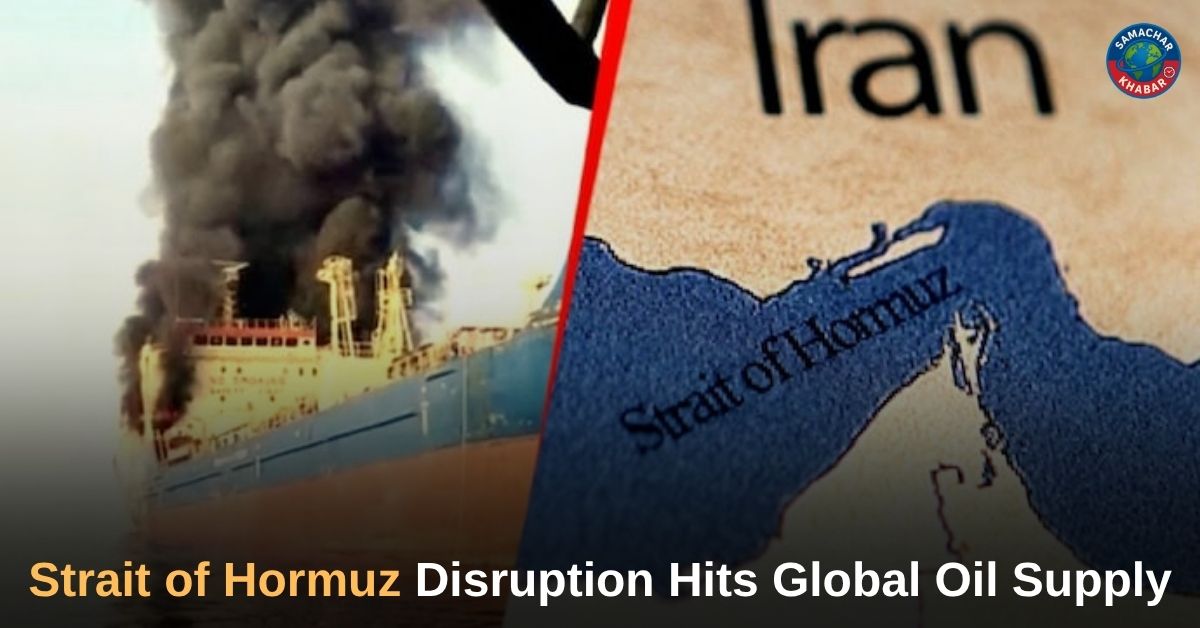
The ongoing disruption in the Strait of Hormuz is placing significant pressure on global oil supply chains, with tanker traffic sharply reduced and energy flows constrained. The situation, driven by escalating conflict in West Asia, is affecting major importers such as India and China while pushing global oil prices higher. With floating reserves declining and transit routes blocked, the crisis is exposing vulnerabilities in energy security and raising concerns about prolonged supply shortages impacting economies worldwide.
Key Takeaways: Strait of Hormuz Oil Supply Crisis
- Strait of Hormuz carries around 20 million barrels per day, nearly 20% of global oil supply
- Tanker traffic has dropped by about 90% since February 28
- Global oil supply saw a 10% decline, according to the International Energy Agency
- India faces greater exposure due to dependence on Gulf oil and LPG
- China is better positioned with reserves exceeding 1 billion barrels
- Floating Russian crude declined from 20 million barrels to under 5 million barrels
- Oil prices have risen above $100 per barrel, briefly nearing $120
- European Union is assessing jet fuel imports and reserve strategies
Strategic Importance of the Strait of Hormuz
The Strait of Hormuz remains one of the most critical energy transit routes globally. Located between Iran to the north and the Musandam Peninsula, shared by Oman and the United Arab Emirates, the strait stretches approximately 178 kilometres and narrows to about 39 kilometres at its tightest point.
Under normal conditions, the route facilitates the movement of around 20 million barrels of oil daily, accounting for nearly one in every five barrels consumed worldwide. The International Maritime Organization manages traffic through a system of two shipping lanes, each about two miles wide, separated by a buffer zone.
Also Read: Iran envoy updates on ‘safe passage’ in Strait of Hormuz| India News
Iran maintains strategic oversight through naval and air bases on islands such as Abu Musa and the Greater and Lesser Tunb islands, placing the waterway at the centre of the ongoing crisis.
Severe Disruption in Oil Transit
Since the conflict began on February 28, tanker movement through the Strait of Hormuz has declined dramatically, with reports indicating a drop of approximately 90 percent. Many vessels are anchored in open waters awaiting safer passage.
- Between eight and ten commercial ships have been damaged
- Attacks involved drones, missiles, and explosive surface craft
- Widespread GPS jamming has increased navigational risks
Reports indicate that Iran has blocked most commercial traffic and targeted vessels attempting to pass through the route. The disruption has effectively halted movement through the strait, including vessels operating under sanctions for China’s independent refiners, which have shown reluctance to challenge the US naval blockade.
India and China Face Supply Pressures
India and China, Asia’s largest crude importers, initially managed the disruption through alternative arrangements. These included direct dealings with Iran and drawing on Russian and Iranian crude already in transit.
However, this buffer is diminishing.
According to a Bloomberg report:
- Floating Russian crude fell from 20 million barrels in mid-February
- Declined to under 5 million barrels, with estimates near 3 million barrels
India faces greater exposure due to its reliance on the Gulf region not only for crude oil but also for liquefied petroleum gas used in households. Supply strains are becoming more evident.
India has increased purchases of Russian crude, aided by US waivers, with imports nearing levels seen around June 2023. Refiners indicate sufficient supply for the next month, but prices no longer reflect earlier discounted levels.
Following incidents where two Indian vessels were targeted, India has raised the issue with Iran in strong terms. According to Randhir Jaiswal, spokesperson for the Ministry of External Affairs, New Delhi has also temporarily halted dispatching empty ships to the Gulf.
China’s Position and Market Strain
China is relatively better positioned due to its long-term focus on energy security and reserves exceeding 1 billion barrels. However, it is also experiencing rising pressure.
According to the International Energy Agency:
- Absence of flows through the Strait of Hormuz led to a 10% drop in global supply last month
State-run refiners in China have already begun scaling back operations. Independent refiners, known as “teapots,” which account for nearly one-fifth of China’s refining capacity, are facing tighter supplies and rising costs.
Xavier Tang, senior market analyst at Vortexa Ltd, noted that Iranian crude in transit is likely to decline as the US blockade disrupts previously steady flows.
Iran currently has around 160 million barrels of oil on water, only slightly below pre-conflict levels.
Global Market Impact and Supply Constraints
The disruption has pushed oil prices above $100 per barrel, briefly approaching $120. Analysts indicate that the impact of prolonged disruption will extend beyond West Asia.
Only Saudi Arabia and the United Arab Emirates operate pipelines that can partially bypass the Strait of Hormuz, with a combined spare capacity of about 3.5 million barrels per day—far below normal flow levels.
The tightening supply has also led to pricing shifts:
- Russian and Iranian crude, previously discounted, are now trading at premiums
- Buyers are competing for alternative supplies
Anoop Singh of Oil Brokerage Ltd stated that “all of Asia is looking at very constrained oil supplies,” adding that the conflict is affecting multiple nations.
European Concerns Over Jet Fuel Supply
The blockade has also raised concerns in Europe, particularly regarding jet fuel supply. The European Union is exploring alternative imports from the United States and considering new reserve requirements.
Transport Commissioner Apostolos Tzitzikostas stated that while stocks are under pressure, there is no evidence of actual shortages and widespread flight cancellations are not expected.
However, Fatih Birol, head of the International Energy Agency, warned that Europe may have “maybe six weeks or so” of jet fuel left if disruptions continue.
The European Commission is expected to introduce measures, including a fuel observatory to monitor supply levels and assess minimum stock obligations.
Energy Crisis Expands Beyond Regional Boundaries
The disruption in the Strait of Hormuz is increasingly affecting global energy stability. With more than 80 percent of oil and gas transported through the route destined for Asian markets, the ongoing crisis is placing pressure on supply chains, raising costs, and impacting economic stability.
As floating reserves decline, transit routes remain restricted, and geopolitical tensions persist, the situation continues to evolve, with implications for both energy-importing nations and global markets.
Spiritual Perspective on Global Crisis
The disruption in the Strait of Hormuz highlights how deeply interconnected global systems are and how quickly uncertainty can affect nations and households alike. In such times, spiritual understanding often emphasizes balance, awareness, and responsible conduct.
According to the teachings of Tatvdarshi Sant Rampal Ji Maharaj, true Knowledge encourages individuals and societies to act with wisdom, restraint, and clarity, especially during periods of instability. Such perspectives underline the importance of maintaining ethical decisions and inner stability when external conditions remain uncertain.
For more information visit our
Website: www.jagatgururampalji.org
YouTube: Sant Rampal Ji Maharaj
Facebook: Spiritual Leader Saint Rampal Ji
X (Twitter): @SaintRampalJiM
FAQs on Strait of Hormuz Oil Supply
1. Why is the Strait of Hormuz important for oil supply?
It carries around 20 million barrels daily, nearly 20% of global oil consumption.
2. How much has tanker traffic dropped?
Traffic has declined by about 90% since the conflict began on February 28.
3. Why is India more affected than China?
India depends heavily on Gulf oil and LPG, with limited reserves compared to China.
4. What is happening to floating oil reserves?
Russian crude in transit has dropped sharply, reducing available supply buffers.
5. How is Europe affected by the disruption?
Europe faces pressure on jet fuel supplies and is exploring alternative imports and reserve strategies.