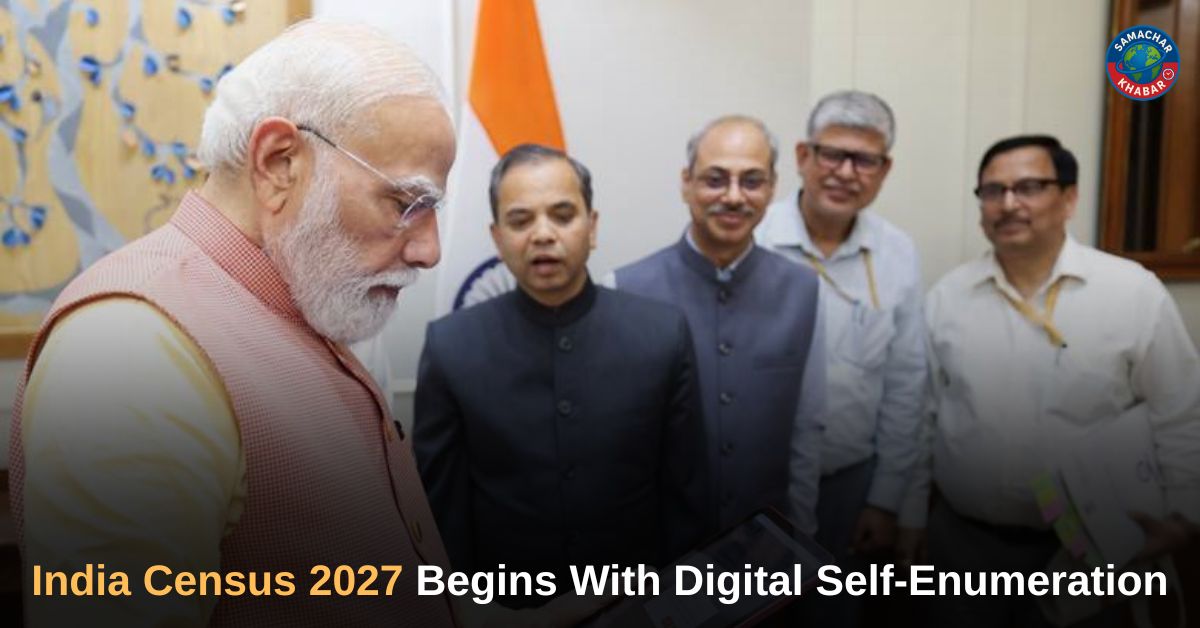
India Census 2027: India has started preparations for Census 2027 with a major transition toward digital-first population data collection. The nationwide exercise, delayed from 2021 partly due to the COVID-19 pandemic, introduces online self-enumeration, mobile applications for field surveys and digital mapping systems for the first time in the history of the Indian Census. Officials said the data collected during the exercise will support national planning, policy formulation and resource allocation. The census will also include caste enumeration during its second phase across states and federal territories.
Key Takeaways on India Census 2027 Self-Enumeration
- India has started Census 2027 preparations with digital-first systems
- Citizens can submit household details through an online self-enumeration portal
- Self-enumeration in Gujarat is scheduled from May 17 to May 31, 2026
- Door-to-door House Listing Operations will take place from June 1 to June 30, 2026
- More than 3 million officials will participate in the nationwide exercise
- Enumerators will use a mobile-based HLO App for digital data collection
- Census 2027 will include caste enumeration during the second phase
- The exercise is expected to cost $1.3 billion and continue for one year
- Data confidentiality will remain protected under the Census Act of 1948
Gujarat Begins Preparations for Census 2027
The Directorate of Census Operations in Gujarat has officially started preparatory activities for Census 2027, introducing a significant shift toward digital data collection. During a press briefing at the Government Circuit House in Gandhinagar, officials outlined the upcoming phases of the census exercise, including online self-enumeration and traditional field-based surveys.
For the first time in the history of the Indian Census, citizens will have the option to provide household information through a dedicated online portal. Officials said this initiative aims to simplify the large-scale demographic exercise while improving accuracy and public convenience.
Self-Enumeration Window Scheduled in May 2026
According to officials, the self-enumeration phase in Gujarat will run from May 17 to May 31, 2026. During this period, residents will be able to voluntarily submit details related to:
- Housing conditions
- Household amenities
- Household assets
The online system has been introduced as an alternative to the manual interview process and is expected to encourage wider digital participation among citizens.
At the national level, India has also introduced self-enumeration for the first time before physical surveys begin. Citizens will be able to register themselves through a government portal available in 16 languages. Enumerators will later verify the submitted details during field visits before adding the information to the official database.
Door-to-Door House Listing Operations to Follow
After the self-enumeration phase, Gujarat will begin House Listing Operations (HLO) from June 1 to June 30, 2026. Census functionaries appointed for the exercise will conduct door-to-door visits across the state.
Officials confirmed that enumerators will use a specially designed mobile application called the HLO App to digitally record information during field surveys. The transition away from paper-based forms is expected to improve the speed of processing and reduce field-level errors.
Nationally, India will conduct two phases of physical door-to-door surveys:
| Census Phase | Focus Area |
| First Phase | Houses and housing conditions |
| Second Phase | Inhabitants and their economic and social parameters |
The nationwide exercise is expected to continue for one year.
More Than 3 Million Officials to Participate
India’s census operation will involve more than 3 million officials, most of whom are school teachers. These officials will physically visit every household across the country’s 36 states and federal territories.
The survey will extend to nearly 640,000 villages as authorities attempt to count every individual living in the country, whose population is estimated at 1.4 billion people.
Also Read: PM Modi’s Work From Home Appeal Amid Iran Crisis Sparks Nationwide Corporate Debate
The once-in-a-decade census was originally scheduled for 2021 but was delayed partly because of the COVID-19 pandemic. Officials stated that the exercise is expected to conclude next March and may cost approximately $1.3 billion.
Digital Tools Introduced for Faster Processing
India is conducting its first digitally managed census through a combination of mobile applications, self-enumeration systems and web-based monitoring tools.
In addition to the HLO App, authorities have deployed a digital mapping application that divides households into smaller geographic segments with limited numbers of houses. Officials said this process is important to ensure that no household is missed during the survey.
A web-based portal has also been introduced to monitor and manage census operations. Authorities expect the digital database to significantly reduce data processing time, allowing several census datasets to be released more quickly.
Caste Enumeration to Be Included in Second Phase
The second phase of Census 2027 will also collect caste-related details. India had recorded caste data in 2011 for the first time in 80 years, although the information was not fully publicised due to concerns regarding accuracy.
The caste system has historically influenced Indian social structure and political processes for thousands of years. Several caste-based political parties operate across the country, while many state institutions provide affirmative action quotas for employment and higher education to lower caste communities.
Officials said the upcoming census will include caste details alongside demographic, economic and social information collected during population enumeration.
Officials Stress Confidentiality Under Census Act
Sujal J. Mayatra, Director of Census, stated that the information collected during the census serves as the foundation for national planning and policy formulation.
Addressing privacy concerns, officials clarified that all data collected during Census 2027 will remain strictly confidential under the Census Act of 1948. Citizens have been encouraged to participate actively and provide accurate information, as the census directly influences future development planning and resource allocation across the state and country.
Digital Census Marks a Major Administrative Shift
Census 2027 represents one of India’s largest administrative and demographic exercises with the introduction of digital-first systems for self-enumeration, field surveys and monitoring operations. Officials said the combination of online participation, mobile-based data collection and digital mapping tools is expected to improve coverage, efficiency and accuracy throughout the nationwide exercise. The census findings will play an important role in shaping policy decisions, planning infrastructure and determining resource distribution for the coming decade.
Collective Responsibility and Human Awareness
As India moves towards a digitally managed Census 2027, the exercise also reflects the importance of collective responsibility, honesty and public participation in national development. Accurate information shared by citizens helps authorities plan resources, infrastructure and welfare measures more effectively for society.
Spiritual teachings often emphasise truthfulness, discipline and social responsibility as essential values in building a balanced community. Tatvdarshi Sant Rampal Ji Maharaj also explains that awareness, truthful conduct and responsible action play an important role in creating a peaceful and organised society.
For more information visit our
Website: www.jagatgururampalji.org
YouTube: Sant Rampal Ji Maharaj
Facebook: Spiritual Leader Saint Rampal Ji
X (Twitter): @SaintRampalJiM
FAQs on India Census 2027 Self-Enumeration
1. What is self-enumeration in Census 2027?
Self-enumeration allows citizens to submit household details online before official field visits begin.
2. When will Gujarat begin self-enumeration for Census 2027?
The self-enumeration phase in Gujarat is scheduled from May 17 to May 31, 2026.
3. What is the HLO App in Census 2027?
The HLO App is a mobile application used by enumerators for digital house listing operations.
4. Will Census 2027 include caste data?
Yes, caste details will be collected during the second phase of the census exercise.
5. How is census data protected in India?
Officials said census information remains confidential under the Census Act of 1948.