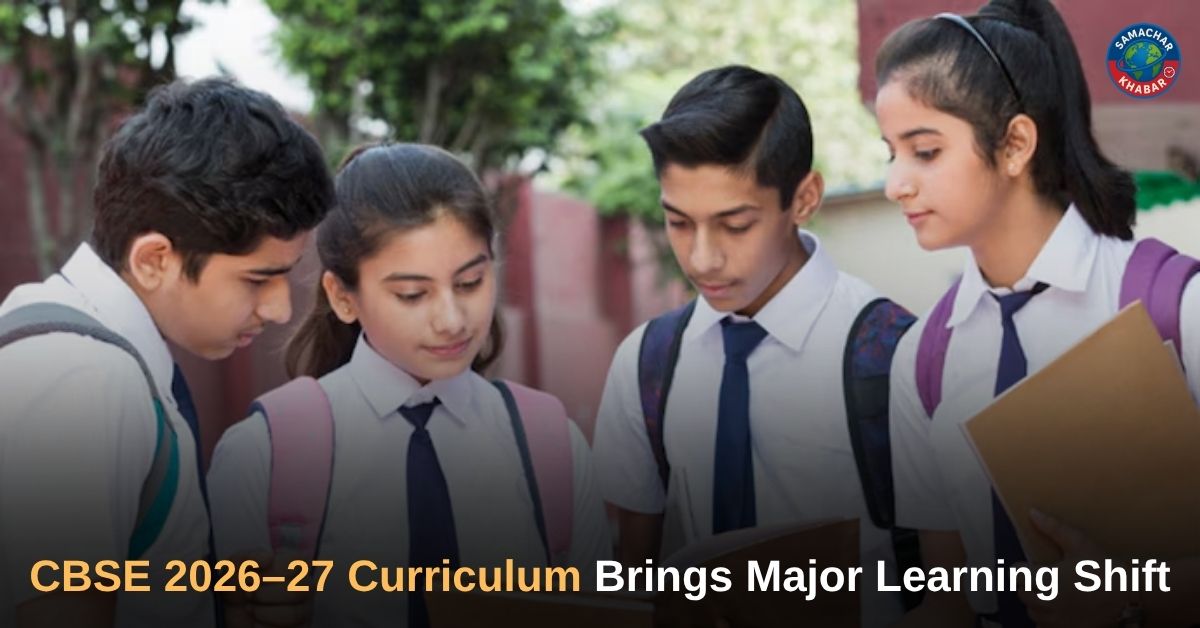
CBSE 2026–27 Curriculum: The Central Board of Secondary Education (CBSE) has introduced a comprehensive curriculum overhaul for the 2026–27 academic session, aligned with the National Education Policy (NEP) 2020 and the National Curriculum Framework (NCF) 2023. The updated syllabus shifts focus from rote memorization to skill-based, competency-driven learning. With the inclusion of Artificial Intelligence (AI), Computational Thinking (CT), multilingual education, and continuous assessment, the reforms aim to build analytical thinking, real-world application skills, and holistic student development.
Key Takeaways of CBSE New Curriculum 2026–27
- Curriculum aligned with NEP 2020 and NCF 2023
- Major impact on students entering Class 9 and Class 11
- Introduction of AI and Computational Thinking from Classes 3 to 8
- Implementation of three-language formula with at least two Indian languages
- Shift to competency-based learning and continuous assessment
- Multidisciplinary subject choices introduced
- Increased weightage of internal assessments
- Integration of Social Science subjects and restructuring of Mathematics syllabus
- Adoption of new NCERT textbooks for the 2026–27 session
Structural Overhaul of the Curriculum

The CBSE New Syllabus 2026–27 marks a significant transformation in how school education is structured. The most noticeable changes will affect students entering Class 9 and Class 11.
For Class 9, the curriculum is now divided into three integrated parts:
- Language Core: Focuses on communication and linguistic proficiency
- Academic Core: Includes Mathematics, Science, and Social Science
- Cross-Curricular Areas: Covers vocational education, arts, physical education, and interdisciplinary areas
This structure moves away from disconnected subject learning toward a more integrated academic framework.
Multidisciplinary Learning and Subject Flexibility
A key reform in the new curriculum is the removal of rigid boundaries between traditional streams such as Science, Commerce, and Arts. Students can now choose combinations like Physics with History or Economics.
Also Read: CBSE Class 10 Result 2026 Declared: 93.70% Pass, Girls Lead, KVs Top, Second Exam Option Opens
This multidisciplinary approach enables a more personalized and interest-driven academic path, allowing students to explore diverse subject areas while building a broader knowledge base.
Transformation of Learning and Assessment Methods
The new syllabus introduces a fundamental shift in how students learn and are evaluated.
Competency-Based Learning
Students are now assessed based on their ability to apply concepts in real-life situations. Assessment methods include:
- Case studies
- Source-based analysis
- Data interpretation
This approach reduces reliance on memorization and encourages analytical thinking.
Two-Level Assessment System
For Class 9, CBSE has introduced a two-level system in Mathematics and Science:
| Level | Description |
| Standard | Mandatory for all students to ensure basic proficiency |
| Advanced | Optional, includes an additional 25-mark exam focusing on analytical skills |
Continuous Evaluation
There is a shift toward internal assessments, where:
- Projects
- Lab work
- Participation
carry more weight, reducing dependence on a single final examination.
Introduction of AI and Computational Thinking
CBSE has integrated Artificial Intelligence (AI) and Computational Thinking (CT) into the curriculum from Classes 3 to 8.
- Computational Thinking (CT): Focuses on logical problem-solving, breaking problems into smaller parts, identifying patterns, and solving them step by step
- Artificial Intelligence (AI): Introduced at an introductory level to develop basic understanding and technological awareness
These additions aim to strengthen logical thinking, problem-solving skills, and digital literacy from an early stage.
Three-Language Formula and Multilingual Education
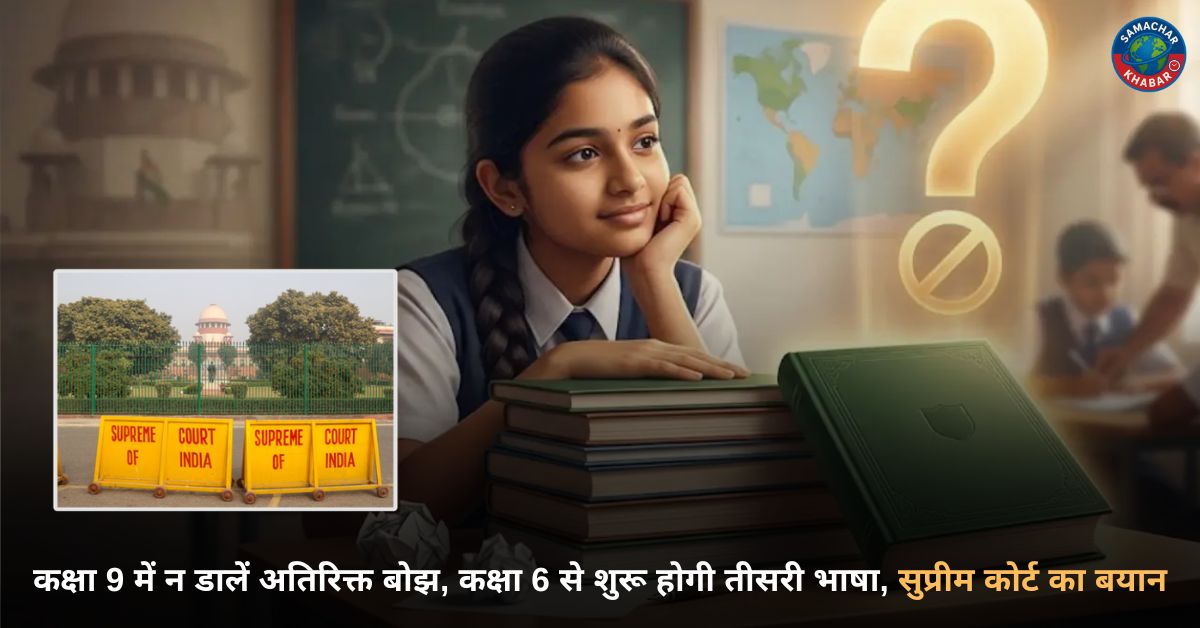
Under the new curriculum, CBSE has implemented the three-language formula starting from Class 6.
- Students must study three languages
- At least two languages must be Indian
- The third language can be English or a foreign language
Schools have flexibility in selecting the second Indian language. This approach promotes multilingualism and cultural understanding, aligning with the objectives of NEP 2020.
Subject-Wise Changes Across Disciplines
Several subjects are undergoing significant changes:
Mathematics
To promote spiral learning:
- Topics like Arithmetic Progressions
- Pair of Linear Equations
have been moved to Class 9.
Social Science
Subjects such as:
- History
- Geography
- Political Science
- Economics
are being integrated into a cohesive study of human society with a focus on the Indian Knowledge System.
Focus on Student Well-being and Future Readiness
The reforms aim to create a balanced and future-ready education system.
| Impact Area | Description |
| Reduced Stress | Content reduction focuses on depth over breadth |
| Digital Literacy | Integration of AI and CT prepares students for technology-driven environments |
| Holistic Growth | National Credit Framework (NCrF) allows credits for sports, arts, and vocational activities |
| Competitive Exams | Strong conceptual foundation expected to support exams like JEE and NEET from 2028 |
The shift toward skill-based learning ensures students are better prepared for future academic and professional challenges.
Preparation Strategy for Students and Parents
To adapt to the new system, students and parents need to focus on:
- Using Updated NCERT Books: Older textbooks will not be relevant for the 2026–27 session
- Understanding Concepts: Emphasis on “why” and “how” rather than memorization
- Active Participation: Internal assessments linked to board eligibility through the APAAR ID system
- Regular Updates: Monitoring official board portals for sample papers and curriculum details
A Defining Shift Towards Skill-Based Education
The CBSE New Curriculum 2026–27 represents a shift from traditional rote learning to a more analytical, skill-based education system. By integrating AI, Computational Thinking, multilingual learning, and continuous evaluation, the reforms aim to transform not just the syllabus but the overall approach to education. With a focus on conceptual clarity, flexibility, and real-world application, the new curriculum is designed to shape students into informed, capable, and future-ready individuals.
Spiritual Reflection on True Knowledge
Just as the modern education system is evolving to keep students updated with technology, logic, and real-world understanding, a similar awareness is essential in the spiritual dimension of life. While individuals strive to stay informed and adaptive in worldly knowledge, spiritual practices are often followed traditionally without questioning their authenticity or scriptural basis. For instance, it is widely believed that Brahma Ji, Vishnu Ji, and Shiv Ji are beyond birth and death; however, deeper understanding through scriptures reveals that they are subject to the cycle of birth and death.
Such clarity becomes possible when one listens to the discourses of a Tatvdarshi Saint. At present, Saint Rampal Ji Maharaj is regarded as a Tatvdarshi Saint Who explains spiritual knowledge based on authentic scriptures of all religions. By listening to His Satsang, individuals can gain clarity on fundamental spiritual truths and align their practices with scriptural evidence. This reflects the importance of seeking verified knowledge not only in education but also in spirituality.
For more information visit our
- Website: www.jagatgururampalji.org
- YouTube: Sant Rampal Ji Maharaj
- Facebook: Spiritual Leader Saint Rampal Ji
- X (Twitter): @SaintRampalJiM
FAQs on CBSE New Curriculum 2026–27
1. What is the main focus of the CBSE 2026–27 curriculum?
It focuses on skill development, competency-based learning, and real-world application instead of memorization.
2. Which classes are most affected by the new syllabus?
Students entering Class 9 and Class 11 will experience the most significant changes.
3. What is the three-language formula in CBSE?
Students must study three languages, with at least two being Indian languages.
4. What is Computational Thinking in the new curriculum?
It involves logical problem-solving by breaking problems into steps, identifying patterns, and finding structured solutions.
5. How will assessments change under the new system?
Assessments will include internal evaluations, projects, and competency-based tests instead of relying only on final exams.